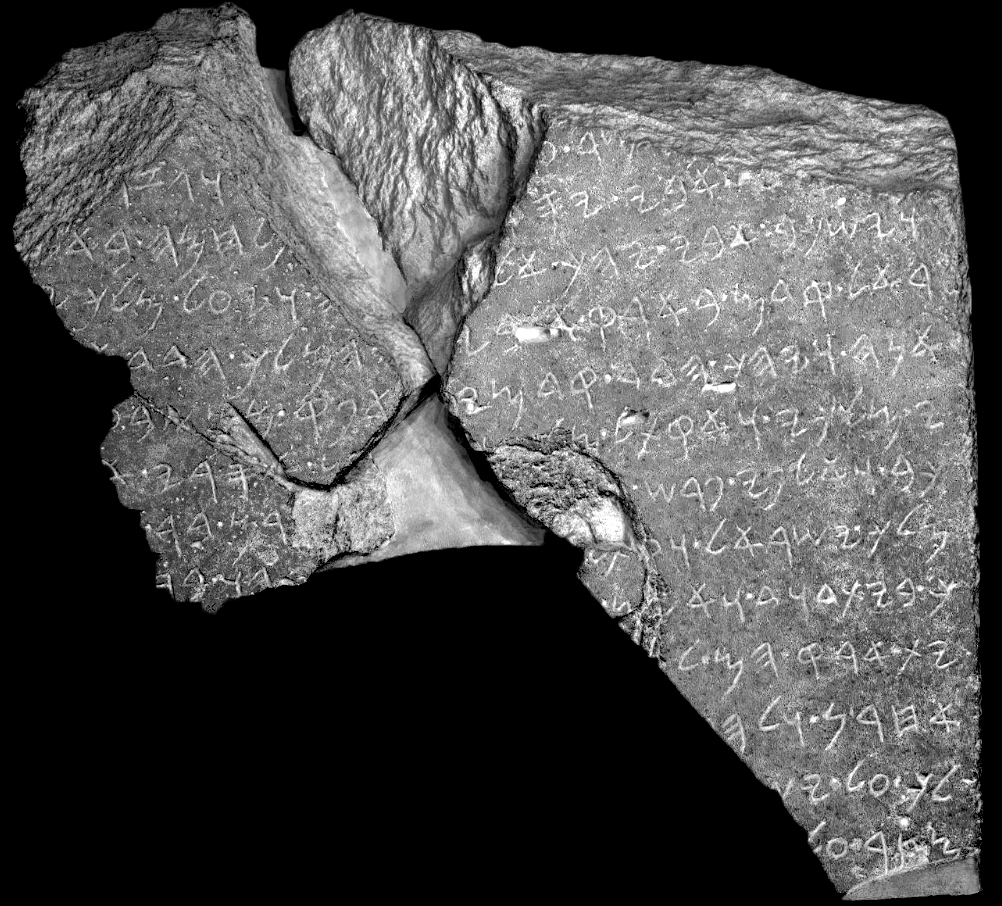
Reflectance Transformation Imaging
Reflectance Transformation Imaging (RTI) is a computational photography technique that captures an object’s surface under many different lighting angles and then combines those images into an interactive digital file. This allows you to “relight” the object virtually and reveal fine surface details that are otherwise hard to see.
Originally developed at Hewlett-Packard Labs in 2001 by Tom Malzbender, RTI evolved from an earlier method called Polynomial Texture Mapping (PTM).
How RTI Works
The process is surprisingly elegant:
1. Fixed Camera, Fixed Object
The object and camera remain completely still throughout the capture sequence.
2. Multiple Light Positions
Dozens of photos are taken, each with the light coming from a different direction. In dome-based setups, N light sources are arranged hemispherically around the object, and each fires once while the camera captures an exposure.
3. Computational Synthesis
Specialized software analyzes how each pixel responds to changing light and builds a per‑pixel reflectance function. This lets the viewer move a virtual light source around the object in real time.
What RTI Reveals
RTI excels at exposing subtle surface features such as:
-
Fine incisions
-
Tool marks
-
Weathering patterns
-
Inscriptions
-
Brush strokes
-
Surface texture variations
It’s widely used in cultural heritage, archaeology, art conservation, and natural history because it reveals details that even high‑resolution photography or the naked eye can miss.
Why RTI Matters
RTI creates hyper‑realistic digital surrogates that can be examined interactively without risking damage to fragile artifacts. It’s become a powerful tool for:
-
Documentation
-
Research
-
Conservation decision‑making
-
Public presentation
Its open-source ecosystem—supported by groups like Cultural Heritage Imaging—has made it accessible to museums, researchers, and even independent scholars
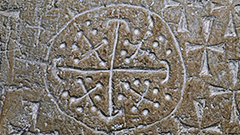
The cenaculum
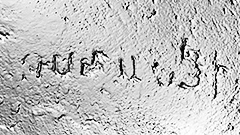
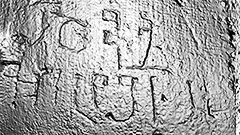
The Cenacle (from the Latin cenaculum, "dining room"), also known as the Upper Room (from the Koine Greek anagaion and hyperōion, both meaning "upper room"), is a room in Mount Zion in Jerusalem, just outside the Old City walls, traditionally held to be the site of the Last Supper, the final meal that, in the Gospel accounts, Jesus held with the apostles.
According to the Christian Bible, the Cenacle was a place in which the apostles continued to gather after the Last Supper, and it was also the site where the Holy Spirit alighted upon the eleven apostles on Pentecost.
The Israeli authorities administer the site, and is part of a building holding the so-called "David's Tomb" on its ground floor.

Saint Helena
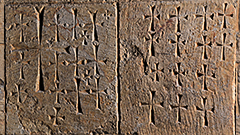
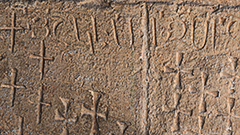
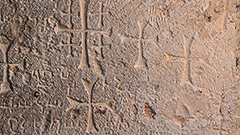
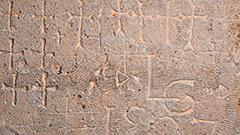
The Chapel of Saint Helena is a 12th-century Armenian church in the lower level of the Church of the Holy Sepulchre in Jerusalem, constructed during the Kingdom of Jerusalem. The Armenians call it the Chapel of St. Gregory the Illuminator, after the saint who brought Christianity to the Armenians.
Tel Dan Stele
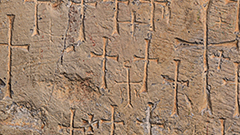
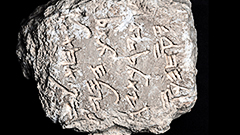
The Tel Dan Stele is a fragmentary stele containing an Aramaic inscription which dates to the 9th century BCE. It is the earliest known extra-biblical archaeological reference to the house of David.
Also, see 3D model: https://skfb.ly/pqIsF